Number Bases
Base 10
We use "Base 10" every day, it is our Decimal Number System and has 10 digits:
0 1 2 3 4 5 6 7 8 9
We count like this:
| 0 | Start at 0 | ||
| • | 1 | Then 1 | |
| •• | 2 | Then 2 | |
| ⋮ | |||
| ••••••••• | 9 | Up to 9 | |
| •••••••••• | 10 | Start back at 0 again, but add 1 on the left | |
| •••••••••• • |
11 | ||
| •••••••••• •• |
12 | ||
| ⋮ | |||
| •••••••••• ••••••••• |
19 | ||
| •••••••••• •••••••••• |
20 | Start back at 0 again, but add 1 on the left | |
| •••••••••• •••••••••• • |
21 | And so on! |
Do you see how the second column keeps count of how many tens? So 21 is:
2
1
But there are other bases!
Binary (Base 2) has only 2 digits: 0 and 1
We count in binary like this:
| 0 | Start at 0 | ||
| • | 1 | Then 1 | |
| •• | 10 | Start back at 0 again, but add 1 on the left | |
| ••• | 11 | ||
| •••• | 100 | Start back at 0 again, and add 1 to the number on the left... ... but that number is already at 1 so it also goes back to 0 ... ... and 1 is added to the next position on the left |
|
| ••••• | 101 | ||
| •••••• | 110 | ||
| ••••••• | 111 | ||
| •••••••• | 1000 | Start back at 0 again (for all 3 digits), add 1 on the left |
|
| ••••••••• | 1001 | And so on! |
Demonstration
See how it is done in this little demonstration (press play):
Each column left is multiplied by the base (2 in this case):
2×2×2×2
2×2×2
2×2
2
1
Also try Decimal, and other bases like 3 or 4.
It will help you understand how all these different bases work.
Ten vs 10
The word ten means this many: ••••••••••
The numeral 10 means 1 lot of our base and zero extra ones
In base 2: 10 means "one-two and zero-ones":
1
0
Ternary (Base 3) has 3 digits: 0, 1 and 2
We count like this:
| 0 | Start at 0 | ||
| • | 1 | Then 1 | |
| •• | 2 | ||
| ••• | 10 | Start back at 0 again, but add 1 on the left | |
| •••• | 11 | ||
| ••••• | 12 | ||
| •••••• | 20 | Start back at 0 again, but add 1 on the left | |
| ••••••• | 21 | ||
| •••••••• | 22 | ||
| ••••••••• | 100 | Start back at 0 again, and add 1 to the number on the left... ... but that number is already at 2 so it also goes back to 0 ... ... and 1 is added to the next position on the left |
|
| •••••••••• | 101 | And so on! |
Quaternary (Base 4) has 4 digits: 0, 1, 2 and 3
We count like this:
| 0 | Start at 0 | ||
| • | 1 | Then 1 | |
| •• | 2 | ||
| ••• | 3 | ||
| •••• | 10 | Start back at 0 again, but add 1 on the left | |
| ••••• | 11 | ||
| •••••• | 12 | ||
| ••••••• | 13 | ||
| •••••••• | 20 | Start back at 0 again, but add 1 on the left | |
| ••••••••• | 21 | And so on! |
Quinary (Base 5) has 5 digits: 0, 1, 2, 3 and 4
We count like this:
| 0 | Start at 0 | ||
| • | 1 | Then 1 | |
| •• | 2 | ||
| ••• | 3 | ||
| •••• | 4 | ||
| ••••• | 10 | Start back at 0 again, but add 1 on the left | |
| •••••• | 11 | ||
| ••••••• | 12 | ||
| •••••••• | 13 | ||
| ••••••••• | 14 | ||
| •••••••••• | 20 | Start back at 0 again, but add 1 on the left | |
| •••••••••• • |
21 | And so on! |
Senary (Base 6) has 6 digits: 0, 1, 2, 3, 4 and 5
We count like this:
| 0 | Start at 0 | ||
| • | 1 | Then 1 | |
| •• | 2 | ||
| ••• | 3 | ||
| •••• | 4 | ||
| ••••• | 5 | ||
| •••••• | 10 | Start back at 0 again, but add 1 on the left | |
| ••••••• | 11 | ||
| •••••••• | 12 | ||
| ••••••••• | 13 | ||
| •••••••••• | 14 | ||
| •••••••••• • |
15 | ||
| •••••••••• •• |
20 | Start back at 0 again, but add 1 on the left | |
| •••••••••• ••• |
21 | And so on! |
Septenary (Base 7) has 7 digits: 0, 1, 2, 3, 4, 5 and 6
We count like this:
| 0 | Start at 0 | ||
| • | 1 | Then 1 | |
| •• | 2 | Then 2 | |
| ⋮ | |||
| •••••• | 6 | Up to 6 | |
| ••••••• | 10 | Start back at 0 again, but add 1 on the left | |
| •••••••• | 11 | ||
| ••••••••• | 12 | ||
| ⋮ | |||
| •••••••••• ••• |
16 | ||
| •••••••••• •••• |
20 | Start back at 0 again, but add 1 on the left | |
| •••••••••• ••••• |
21 | And so on! |
Octal (Base 8) has 8 digits
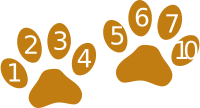
If Dogs ruled the world they might use base-8 instead of decimal:
0 1 2 3 4 5 6 7
| 0 | Start at 0 | ||
| • | 1 | Then 1 | |
| •• | 2 | Then 2 | |
| ⋮ | |||
| ••••••• | 7 | Up to 7 | |
| •••••••• | 10 | Start back at 0 again, but add 1 on the left | |
| ••••••••• | 11 | ||
| •••••••••• | 12 | ||
| ⋮ | |||
| •••••••••• ••••• |
17 | ||
| •••••••••• •••••• |
20 | Start back at 0 again, but add 1 on the left | |
| •••••••••• ••••••• |
21 | And so on! |
Nonary (Base 9) has 9 digits:
0 1 2 3 4 5 6 7 8
We count like this:
| 0 | Start at 0 | ||
| • | 1 | Then 1 | |
| •• | 2 | Then 2 | |
| ⋮ | |||
| •••••••• | 8 | Up to 8 | |
| ••••••••• | 10 | Start back at 0 again, but add 1 on the left | |
| •••••••••• | 11 | ||
| •••••••••• • |
12 | ||
| ⋮ | |||
| •••••••••• ••••••• |
18 | ||
| •••••••••• •••••••• |
20 | Start back at 0 again, but add 1 on the left | |
| •••••••••• ••••••••• |
21 | And so on! |
Decimal (Base 10) has 10 digits:
0 1 2 3 4 5 6 7 8 9
Well ... we talked about this at the start but here it is again:
| 0 | Start at 0 | ||
| • | 1 | Then 1 | |
| •• | 2 | Then 2 | |
| ⋮ | |||
| ••••••••• | 9 | Up to 9 | |
| •••••••••• | 10 | Start back at 0 again, but add 1 on the left | |
| •••••••••• • |
11 | ||
| •••••••••• •• |
12 | ||
| ⋮ | |||
| •••••••••• ••••••••• |
19 | ||
| •••••••••• •••••••••• |
20 | Start back at 0 again, but add 1 on the left | |
| •••••••••• •••••••••• • |
21 | And so on! |
Undecimal (Base 11)
Undecimal (base 11) needs one more digit than Decimal, so "A" is used, like this:
| Decimal: | 0 | 1 | 2 | 3 | 4 | 5 | 6 | 7 | 8 | 9 | 10 | 11 | 12 | ... |
|---|---|---|---|---|---|---|---|---|---|---|---|---|---|---|
| Undecimal: | 0 | 1 | 2 | 3 | 4 | 5 | 6 | 7 | 8 | 9 | A | 10 | 11 | ... |
Letters! When a base needs more than ten digits, we need extra symbols. Here we use A, B, C and so on, but some people use different systems.
Duodecimal (Base 12)
Duodecimal (base 12) needs two more digits than Decimal, so "A" and "B" are used:
| Decimal: | 0 | 1 | 2 | 3 | 4 | 5 | 6 | 7 | 8 | 9 | 10 | 11 | 12 | 13 | ... |
|---|---|---|---|---|---|---|---|---|---|---|---|---|---|---|---|
| Duodecimal: | 0 | 1 | 2 | 3 | 4 | 5 | 6 | 7 | 8 | 9 | A | B | 10 | 11 | ... |
Hexadecimal (Base 16)
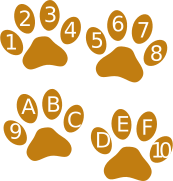
Dogs might understand hexadecimal well.
It uses the digits 0 to 9, then the six letters A to F, like this:
| Decimal: | 0 | 1 | 2 | 3 | 4 | 5 | 6 | 7 | 8 | 9 | 10 | 11 | 12 | 13 | 14 | 15 | 16 | 17 | ... |
|---|---|---|---|---|---|---|---|---|---|---|---|---|---|---|---|---|---|---|---|
| Hexadecimal: | 0 | 1 | 2 | 3 | 4 | 5 | 6 | 7 | 8 | 9 | A | B | C | D | E | F | 10 | 11 | ... |
So hexadecimal is:
0 1 2 3 4 5 6 7 8 9 A B C D E F
Vigesimal (Base 20)
With vigesimal, the convention is that I isn't used because it looks like 1, so J=18 and K=19, as in this table:
| Decimal: | 0 | 1 | 2 | 3 | 4 | 5 | 6 | 7 | 8 | 9 | 10 | 11 | 12 | 13 | 14 | 15 | 16 | 17 | 18 | 19 | 20 | ... |
|---|---|---|---|---|---|---|---|---|---|---|---|---|---|---|---|---|---|---|---|---|---|---|
| Vigesimal: | 0 | 1 | 2 | 3 | 4 | 5 | 6 | 7 | 8 | 9 | A | B | C | D | E | F | G | H | J | K | 10 | ... |
Sexagesimal (Base 60)
Sexagesimal works like clockwork!
There are no special codes, just the numbers 0 to 59, like we use with hours and minutes.
More About Bases
The number base is also called the radix
How to Show the Base
To show what base a number has, put the base in the lower right like this:
1012
This is in base 2 (binary)
3148
This is in base 8 (octal)
Summary
Some selected bases:
| Count | Base 2 |
Base 3 |
Base 4 |
Base 8 |
Base 10 |
Base 16 |
|---|---|---|---|---|---|---|
| 0 | 0 | 0 | 0 | 0 | 0 | |
| • | 1 | 1 | 1 | 1 | 1 | 1 |
| •• | 10 | 2 | 2 | 2 | 2 | 2 |
| ••• | 11 | 10 | 3 | 3 | 3 | 3 |
| •••• | 100 | 11 | 10 | 4 | 4 | 4 |
| ••••• | 101 | 12 | 11 | 5 | 5 | 5 |
| •••••• | 110 | 20 | 12 | 6 | 6 | 6 |
| ••••••• | 111 | 21 | 13 | 7 | 7 | 7 |
| •••••••• | 1000 | 22 | 20 | 10 | 8 | 8 |
| ••••••••• | 1001 | 100 | 21 | 11 | 9 | 9 |
| •••••••••• | 1010 | 101 | 22 | 12 | 10 | A |
| ••••••••••• | 1011 | 102 | 23 | 13 | 11 | B |
| •••••••••••• | 1100 | 110 | 30 | 14 | 12 | C |
| ••••••••••••• | 1101 | 111 | 31 | 15 | 13 | D |
| •••••••••••••• | 1110 | 112 | 32 | 16 | 14 | E |
| ••••••••••••••• | 1111 | 120 | 33 | 17 | 15 | F |
| •••••••••••••••• | 10000 | 121 | 100 | 20 | 16 | 10 |