Prime Numbers Chart and Calculator
A Prime Number is:
a whole number above 1 that cannot be made by multiplying other whole numbers
When it can be made by multiplying other whole numbers, it's called a Composite Number.
Here we see how it works:
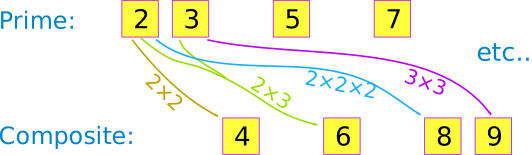
2 is Prime, 3 is Prime, 4 is Composite (=2×2), 5 is Prime, and so on...
And there are infinitely many prime numbers! 1 is neither prime nor composite.
Here is a list of all the prime numbers up to 1,000 (and more):
2357111317192329313741434753596167717379838997101103107109113127131137139149151157163167173179181191193197199211223227229233239241251257263269271277281283293307311313317331337347349353359367373379383389397401409419421431433439443449457461463467479487491499503509521523541547557563569571577587593599601607613617619631641643647653659661673677683691701709719727733739743751757761769773787797809811821823827829839853857859863877881883887907911919929937941947953967971977983991997
more...
Examples:
- Is 8 a Prime Number? No, because it can be made by 2×4=8
- Is 12 a Prime Number? No, because 12 can be made by 2×6 and also 3×4
- Is 73 a Prime Number? Yes, as no other whole numbers multiply together to make it
Calculator ... Is It Prime?
Discover if a whole number is prime or not (works on whole numbers up to 4,294,967,295):
numbers/images/prime-is-it.js
You can also try this Prime Numbers Activity
To find the prime factors of a number, try our Prime Factorization Tool.