Adding and Subtracting Polynomials
A polynomial looks like this:
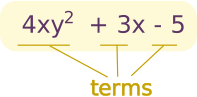
example of a polynomial
this one has 3 terms
To add polynomials we simply add any like terms together ... so what's a like term?
Like Terms
Like Terms are terms whose variables (and their exponents such as the 2 in x2) are the same.
In other words, terms that are "like" each other.
Note: the coefficients (the numbers you multiply by, such as "5" in 5x) can be different.
Example:
are all like terms because the variables are all x
Example:
are all like terms because the variables are all xy2
Example: These are NOT like terms because the variables and/or their exponents are different:
Adding Polynomials
Two Steps:
- Place like terms together
- Add the like terms
Example: Add 2x2 + 6x + 5 and 3x2 - 2x - 1
Here's an animated example:
(Note: there was no "like term" for the -7 in the other polynomial, so we didn't have to add anything to it.)
Adding in Columns
We can also add them in columns like this:
Adding Several Polynomials
We can add several polynomials together like that.
Example: Add (2x2 + 6y + 3xy) , (3x2 - 5xy - x) and (6xy + 5)
Line them up in columns and add:
3x2 - 5xy - x
6xy + 5
Using columns helps us to match the correct terms together in a complicated sum.
Subtracting Polynomials
It's like multiplying the whole polynomial by −1.
So first reverse the sign of each term we are subtracting (in other words turn + into −, and − into +), then add as usual.
Like this:
Note: After subtracting 2xy from 2xy we ended up with 0, so there's no need to mention the "xy" term any more.
Example: (5x2 + 2x + 1) − (3x2 − 4x + 2)
First change the sign of each term in the polynomial being subtracted:
−(3x2 − 4x + 2) becomes −3x2 + 4x − 2
Done!