Mixed Fractions
(Also called "Mixed Numbers")
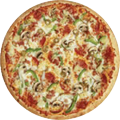 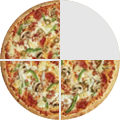 |
| 134 |
| (one and three-quarters) |
A mixed fraction is a whole number and a proper fraction combined.
Such as 134
Examples
| 238 | 714 | 11415 | 2145 |
See how each example is made up of a whole number and a proper fraction together? That is why it is called a "mixed" fraction (or mixed number).
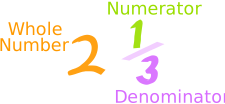
Names
We can give names to every part of a mixed fraction:
Three Types of Fractions
There are three types of fraction:
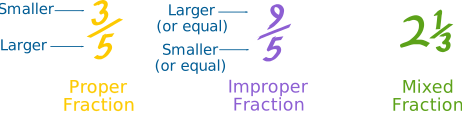
Mixed Fractions or Improper Fractions
We can use either an improper fraction or a mixed fraction to show the same amount.
For example 134 = 74, as shown here:
| 134 | 74 | |
|
= | 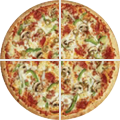 |

Converting Improper Fractions to Mixed Fractions
To convert an improper fraction to a mixed fraction, follow these steps:
- Divide the numerator by the denominator
- Write down the whole number answer
- Then write down any remainder above the denominator
Example: Convert 114 to a mixed fraction.
Divide:
Write down the 2 and then write down the remainder (3) above the denominator (4).
Answer:
2 34
That example can be written like this:
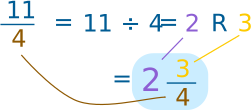
Example: Convert 103 to a mixed fraction.
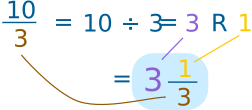
Answer:
3 13

Converting Mixed Fractions to Improper Fractions
To convert a mixed fraction to an improper fraction, follow these steps:
- Multiply the whole number part by the fraction's denominator
- Add that to the numerator
- Then write the result on top of the denominator
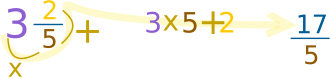
Example: Convert 325 to an improper fraction.
Multiply the whole number part by the denominator:
Add that to the numerator:
Then write that result above the denominator:
175
We can do the numerator in one go:
Example: Convert 219 to an improper fraction.
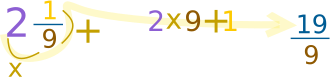
Are Improper Fractions Bad ?
NO, they aren't bad!
For mathematics they are actually better than mixed fractions. Because mixed fractions can be confusing when we write them in a formula: should the two parts be added or multiplied?

But, for everyday use, people understand mixed fractions better.
Example: It is easier to say "I ate 214 sausages", than "I ate 94 sausages"
We Recommend:
- For Mathematics: Improper Fractions
- For Everyday Use: Mixed Fractions